WELCEOM TO TAI'AN CITY RUIHENG BUILDING MATERIALS CO., LTD OFFICIAL WEBSITE
Language:  ∷
∷ 
∷  ∷
∷ Geomembranes are impermeable polymeric sheets widely used as primary liners in chemical wastewater containment facilities to prevent groundwater contamination. Proper installation is critical to ensure long-term performance and environmental safety. This article outlines the key construction steps, provides a technical parameter table, and highlights three major advantages of using geomembranes for such applications.
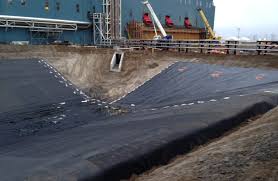
Construction Process Overview
Subgrade Preparation: The foundation soil (subgrade) must be meticulously prepared. This involves clearing all vegetation, debris, and sharp objects. The soil is then graded to design specifications, compacted to ≥95% Standard Proctor density, and leveled to create a smooth, stable surface free of voids, cracks, or stones larger than 20mm. A uniform sand or geotextile cushion layer is often installed to protect the geomembrane.
Geomembrane Deployment: Rolls of geomembrane are deployed over the prepared subgrade, typically along the pond's slope to minimize seam length. Deployment is done on calm, dry days to avoid material distortion from wind or moisture. The sheets are laid loosely with minimal tension, allowing for thermal expansion/contraction.
Scanning (Seaming): This is the most critical operation. Adjacent panels are joined using thermal fusion methods (e.g., dual hot wedge or extrusion welding for HDPE) or chemical bonding for certain polymers like PVC. All seams must be continuous, uniform, and intact. Seam integrity is verified through 100% visual inspection and non-destructive testing (e.g., air pressure or vacuum tests) on a statistically significant sample of seams via destructive shear/peel tests.
Detail Work and Anchorage: Special attention is given to structural penetrations, corners, and transitions. Prefabricated geomembrane boots or patches are used for pipe penetrations. The liner is securely anchored in a perimeter trench (anchor trench) backfilled with compacted soil.
Protection Layer Installation: Immediately after placement and testing, the geomembrane is covered with a protective layer, such as a non-woven geotextile (≥300 g/m²) or a sand layer, to shield it from UV degradation and physical damage during subsequent operations (e.g., installation of drainage layers or final cover).
Quality Assurance & Control (QA/QC): A rigorous QA/QC program is maintained throughout, including certification of geomembrane material, daily seam shear/peel testing, and comprehensive documentation (as-built drawings, weld logs, test reports).
Technical Parameter Table for HDPE Geomembrane in Chemical Containment
| Parameter | Typical Specification/Value | Test Standard |
|---|---|---|
| Material | High-Density Polyethylene (HDPE) | - |
| Thickness | 1.5 mm - 2.5 mm (60 - 100 mil) | ASTM D5994 |
| Density | ≥ 0.940 g/cm³ | ASTM D1505 |
| Tensile Properties | Yield Strength: ≥ 22 kN/m Break Strength: ≥ 40 kN/m | ASTM D6693 |
| Elongation at Yield | ≥ 12% | ASTM D6693 |
| Puncture Resistance | ≥ 480 N | ASTM D4833 |
| Tear Resistance | ≥ 187 N | ASTM D1004 |
| Carbon Black Content | 2.0 - 3.0% | ASTM D1603 |
| Oxidation Induction Time (OIT) | ≥ 100 min (Standard-OIT) | ASTM D3895 |
| Permeability Coefficient | < 1 x 10⁻¹³ cm/s | ASTM E96 |
Three Key Advantages
Exceptional Chemical Resistance: HDPE geomembranes, in particular, exhibit outstanding resistance to a wide spectrum of aggressive chemicals, acids, alkalis, and salts commonly found in industrial wastewater. This inert nature ensures long-term integrity of the containment system without degradation or loss of impermeability.
Superior Impermeability and Leak Prevention: With an extremely low hydraulic conductivity (<10⁻¹³ cm/s), geomembranes form an essentially impervious barrier. When integrated with a compacted clay liner or a leak detection system, they provide a highly effective primary containment layer, drastically minimizing the risk of pollutant migration into the subsurface environment.
Durability and Long Service Life: Engineered with additives like carbon black for UV resistance and antioxidants, modern geomembranes are designed for long-term performance. Their high puncture and tear resistance, combined with excellent environmental stress crack resistance (ESCR), ensure reliable service for decades with minimal maintenance, even under harsh exposure conditions.
COMPANY:TAI'AN CITY RUIHENG BUILDING MATERIALS CO., LTD
Contact:Nickle Nie
Tel:008615866038408
Phone:008615866038408
Email:nickle@rhgeos.com
Add:NO.3566 LONGQUAN ROAD,TAI'AN HI-TECH ZONE,SHANDONG PROVINCE,CHINA